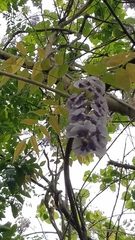
American Wisteria
Wisteria frutescensAlso called Texas Wisteria
American Wisteria is a vine native to Central Texas that grows 25–30 ft tall and 3–6 ft wide. It wants full sun or part shade and medium water, and handles clay soil. Blooms purple in spring. Good for butterflies.
Will it grow in your yard?
Enter your ZIP. The finder checks American Wisteria against your microclimate, then ranks it against your sun, your watering and deer pressure.
From our guide
Village of the HillsTwining vine with compound leaves and short dense clusters of lavender pea flowers.
Why it works here
All the wisteria effect at a fraction of the aggression — this is the native, not the Asian species that destroys structures.
Watch out
Still needs a strong support. Blooms on new wood, so prune after flowering, not before.
The facts
8 sources- Type
- Vine
- Sun
- Full sun to part shade (3+ hrs)
- Water
- Medium
- Height
- 25–30 ft
- Spread
- 3–6 ft
- Bloom
- Spring · purple
- Foliage
- Deciduous
- Soil
- Takes clay · recorded on clay, loam, moist, sand
- Deer
- Moderate — deer may browse it, especially new growth. New growth browsed; established vines fine.
- Wildlife
- Supports butterflies
Where it grows
Recorded in this EPA Level IV ecoregion in the Austin and Hill Country launch area:
5 occurrence records in Central Texas (GBIF).
Can you buy it?
Sold at local nurseries. Confirmed in stock at a Central Texas grower in these sizes:
also grows from seed It starts readily from seed, so a packet from a native-seed supplier, or seed collected with permission, is often the easiest way to get a plant no nursery pots.