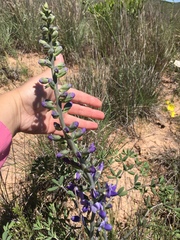
Blue Wild Indigo
Baptisia australisAlso called Purple Baptisia
Blue Wild Indigo is a shrub native to Central Texas that grows 5 ft tall and 3 ft wide. It wants full sun and low to medium water, and handles clay soil. Blooms blue and purple in Apr–Jul. Deer rarely browse it. Good for bees, butterflies, caterpillars and hummingbirds.
Toxic — pets, livestock. Quinolizidine alkaloids in seeds and foliage.
Will it grow in your yard?
Enter your ZIP. The finder checks Blue Wild Indigo against your microclimate, then ranks it against your sun, your watering and deer pressure.
From our guide
Village of the HillsUpright perennial with blue-green foliage, spikes of indigo pea flowers in spring and inflated black seedpods.
Why it works here
Deep taproot makes it essentially permanent and drought-proof once established. Nitrogen fixer.
Watch out
Takes three years to look like anything — do not judge it early. Resents transplanting once settled.
The facts
9 sources- Type
- Shrub
- Sun
- Full sun (6+ hrs)
- Water
- Low to medium
- Height
- 5 ft
- Spread
- 3 ft
- Bloom
- Apr–Jul · blue, purple
- Foliage
- Deciduous
- Soil
- Takes clay · recorded on clay, dry, loam, moist, sand
- Deer
- High — deer rarely browse it. Alkaloids make it unpalatable. Reliably left alone.
- Wildlife
- Supports bees, butterflies, caterpillars and hummingbirds
Where it grows
Recorded in this EPA Level IV ecoregion in the Austin and Hill Country launch area:
1 occurrence record in Central Texas (GBIF).
Can you buy it?
Sold at local nurseries. Confirmed in stock at a Central Texas grower in these sizes: