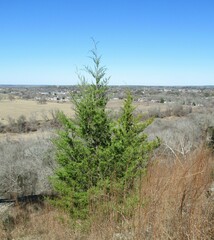
Eastern Red Cedar
Juniperus virginianaEastern Red Cedar is a large tree native to Central Texas that grows 30–50 ft tall and 15–25 ft wide. It wants full sun and low water, and handles caliche and clay soil. Blooms green in late spring. Evergreen — it holds its leaves through winter. Deer rarely browse it. Good for birds and butterflies.
Will it grow in your yard?
Enter your ZIP. The finder checks Eastern Red Cedar against your microclimate, then ranks it against your sun, your watering and deer pressure.
From our guide
Village of the HillsDense evergreen conifer, columnar when young, broadening with age. Blue berrylike cones on female trees.
Why it works here
Genuinely bulletproof — takes drought, caliche, wind and neglect. Berries feed cedar waxwings; dense growth is prime winter cover.
Watch out
Male trees are a serious winter allergen. Bagworms can strip a young tree. Not the same species as Ashe juniper, though the pollen complaint is similar.
The facts
10 sources- Type
- Large tree
- Sun
- Full sun (6+ hrs)
- Water
- Low
- Height
- 30–50 ft
- Spread
- 15–25 ft
- Bloom
- Late Spring · green
- Foliage
- Evergreen
- Soil
- Takes caliche and clay · recorded on calcareous, clay, deep, dry, limestone, loam, sand, well drained
- Deer
- High — deer rarely browse it. Aromatic foliage; deer leave it alone. Bucks still rub young trunks.
- Wildlife
- Supports birds and butterflies
Where it grows
Recorded in these EPA Level IV ecoregions in the Austin and Hill Country launch area:
780 occurrence records in Central Texas (GBIF).
Can you buy it?
Sold at local nurseries. Confirmed in stock at a Central Texas grower in these sizes:
also grows from seed It starts readily from seed, so a packet from a native-seed supplier, or seed collected with permission, is often the easiest way to get a plant no nursery pots.