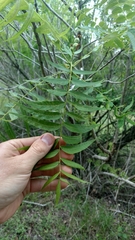
Little Walnut
Juglans microcarpaLittle Walnut is a small tree native to the Texas Hill Country that grows 18–20 ft tall and 20 ft wide. It wants full sun or part shade and medium water, and handles caliche and clay soil. Blooms green in mid spring. Deer rarely browse it. Good for birds and butterflies.
Will it grow in your yard?
Enter your ZIP. The finder checks Little Walnut against your microclimate, then ranks it against your sun, your watering and deer pressure.
From our guide
Village of the HillsSmall multi-trunk walnut with fine compound leaves and small hard nuts.
Why it works here
A creek-bottom native that handles limestone and drought far better than its size suggests. Good filtered shade.
Watch out
Juglone in the roots inhibits some other plants — do not plant tomatoes or azaleas beneath it. Nut drop is hard underfoot.
The facts
8 sources- Type
- Small tree
- Sun
- Full sun to part shade (3+ hrs)
- Water
- Medium
- Height
- 18–20 ft
- Spread
- 20 ft
- Bloom
- Mid Spring · green
- Foliage
- Deciduous
- Soil
- Takes caliche and clay · recorded on clay, dry, limestone, loam, rocky, sand
- Deer
- High — deer rarely browse it. Juglone-bearing foliage is unpalatable.
- Wildlife
- Supports birds and butterflies
Where it grows
Recorded in these EPA Level IV ecoregions in the Austin and Hill Country launch area:
135 occurrence records in Central Texas (GBIF).
Can you buy it?
In the Village of the Hills guide, but not on the grower stock lists we read yet. Ask a native-plant nursery.
also grows from seed It starts readily from seed, so a packet from a native-seed supplier, or seed collected with permission, is often the easiest way to get a plant no nursery pots.