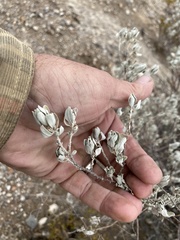
Texas Sage
Leucophyllum frutescensTexas Sage is a shrub native to the Texas Hill Country that grows 5–8 ft tall and 4–5 ft wide. It wants full sun and very low to low water, and handles caliche and clay soil. Blooms white, pink, purple and violet in Jan–Dec. Evergreen — it holds its leaves through winter. Deer rarely browse it. Good for butterflies.
Will it grow in your yard?
Enter your ZIP. The finder checks Texas Sage against your microclimate, then ranks it against your sun, your watering and deer pressure.
From our guide
Village of the HillsSilver-leafed evergreen shrub that blooms in purple flushes a few days after summer rain — which is why old-timers call it barometer bush. Holds its shape without shearing.
Why it works here
The default answer for a hot, dry, unirrigated spot on caliche. Needs nothing once established and shrugs off reflected heat from stone and pavement.
Watch out
Root rot in heavy or irrigated soil. Do not put it on the same zone as turf. Shearing it into a ball destroys the bloom and the form.
The facts
6 sources- Type
- Shrub
- Sun
- Full sun (6+ hrs)
- Water
- Very low to low
- Height
- 5–8 ft
- Spread
- 4–5 ft
- Bloom
- Jan–Dec · white, pink, purple, violet
- Foliage
- Evergreen
- Soil
- Takes caliche and clay · recorded on calcareous, dry, rocky, well drained
- Deer
- High — deer rarely browse it. Aromatic silver foliage; reliably ignored
- Wildlife
- Supports butterflies
Where it grows
Recorded in these EPA Level IV ecoregions in the Austin and Hill Country launch area:
1,899 occurrence records in Central Texas (GBIF).
Can you buy it?
In the Village of the Hills guide, but not on the grower stock lists we read yet. Ask a native-plant nursery.
also grows from seed It starts readily from seed, so a packet from a native-seed supplier, or seed collected with permission, is often the easiest way to get a plant no nursery pots.